
heaven official’s blessing: Complete Guide to Tian Guan Ci Fu
A prince falls from heaven, loses almost everything that once made him important, and returns centuries later with almost no worldly status. Then a mysterious stranger appears who seems to know him far better than expected. That is the doorway into heaven official’s blessing, the English title of Mo Xiang Tong Xiu’s Tian Guan Ci Fu, a Chinese fantasy story that blends mythology, mystery, action and a long developing romance.
The series can be confusing at first because names, titles, identities and realms arrive faster than the explanations. A reader may know Xie Lian, Hua Cheng, Ghost City or the Heavenly Court by name while still wondering how all of those pieces fit together. This guide puts the major ideas in a clear order, separates the novel from its adaptations, and explains why the story has become such a durable favorite among danmei and fantasy readers.
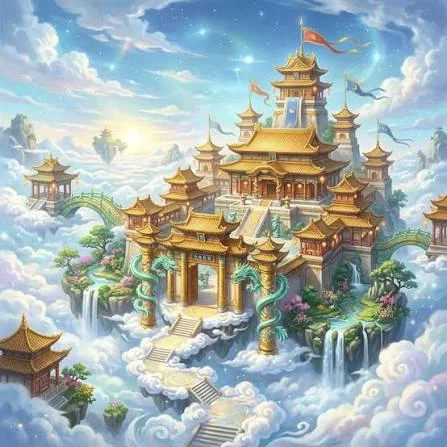
heaven official’s blessing: What the Story Is Really About
At its center, heaven official’s blessing follows Xie Lian, the former Crown Prince of Xianle, who first ascends to godhood as a young man. His divine career does not remain glorious. He is banished repeatedly and eventually becomes known less as a revered prince and more as an unlucky scrap collecting god. After eight hundred years, he ascends again and is sent into the Mortal Realm to complete tasks and deal with supernatural problems.
During those assignments, Xie Lian encounters San Lang, an unusually confident young man whose identity hides a much larger connection to the heavenly and ghostly worlds. San Lang is Hua Cheng, a supreme ghost king feared by heavenly officials and associated with the title Crimson Rain Sought Flower. The relationship between these two characters becomes the emotional spine of the story, but the plot around them is much larger than romance alone.
The narrative moves between personal memory and present day mysteries. Old disasters are not simply background information because they change the meaning of current events. A character who looks harmless in one arc may become important much later, while a past decision can return with consequences that challenge what the reader thought had already been settled. This delayed structure is one reason the novel rewards patient reading rather than relying only on immediate action.
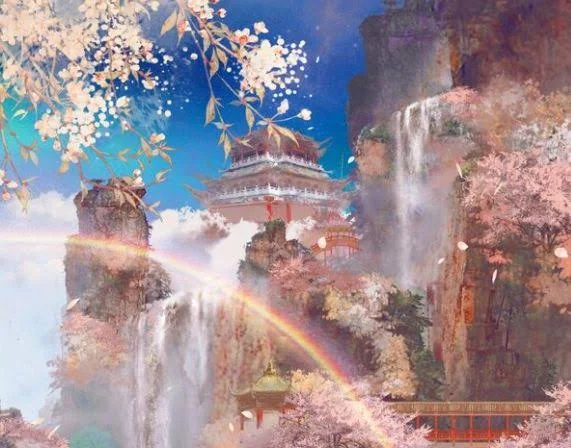
heaven official’s blessing: Xie Lian and His Three Ascensions
Xie Lian is the central character, and understanding his history makes many later choices easier to read. He begins as the crown prince of Xianle, a figure admired for his beauty, discipline, strength and compassion. His first ascent to the heavens gives him divine status, yet that status does not protect him from failure. His story repeatedly tests the difference between being praised as a good person and actually choosing what is right when the outcome is uncertain.
By the time the main story begins, Xie Lian has already experienced extraordinary reversals of fortune. He has lost political security, divine prestige and much of the public faith that once surrounded him. His third ascent therefore carries an unusual tone. It is not a triumphant return to the throne. Instead, he comes back as someone who has learned how little titles can guarantee. That history gives his humor and kindness a more complicated meaning.
One of the strongest qualities of Xie Lian is his persistence. He is not presented as someone who never makes mistakes. He can be impulsive, stubborn, embarrassed and deeply affected by what happened to Xianle. His compassion becomes meaningful precisely because it survives those weaknesses. The story keeps asking whether kindness is still valuable when it fails to produce the result the person hoped for.
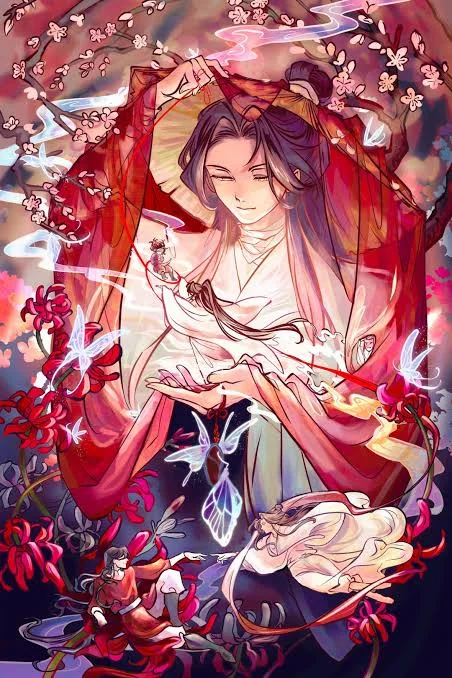
heaven official’s blessing: Hua Cheng and the Meaning of Devotion
Hua Cheng is introduced as a dangerous and mysterious figure, but the most important part of his character is the contrast between his reputation and his behavior around Xie Lian. He is extraordinarily powerful, wealthy and self assured. At the same time, his attention toward Xie Lian is often playful, protective and remarkably patient. That contrast creates much of the story’s romantic tension because Xie Lian must gradually understand who is standing beside him.
Hua Cheng is also known through several names and identities, which can make early reading confusing. San Lang is the identity Xie Lian meets during the early journey, while Hua Cheng is the name associated with his reputation as a ghost king. Crimson Rain Sought Flower is another title connected with him. These names are not separate characters. They represent different ways the same person is perceived across the three realms.
The devotion between Hua Cheng and Xie Lian is a major reason readers stay with the series. It is not presented only through dramatic declarations. Small acts of attention matter just as much. Hua Cheng notices details about Xie Lian that other people overlook, while Xie Lian gradually learns that the seemingly carefree companion beside him has been carrying an enormous amount of history. Their relationship becomes more meaningful as trust replaces uncertainty.
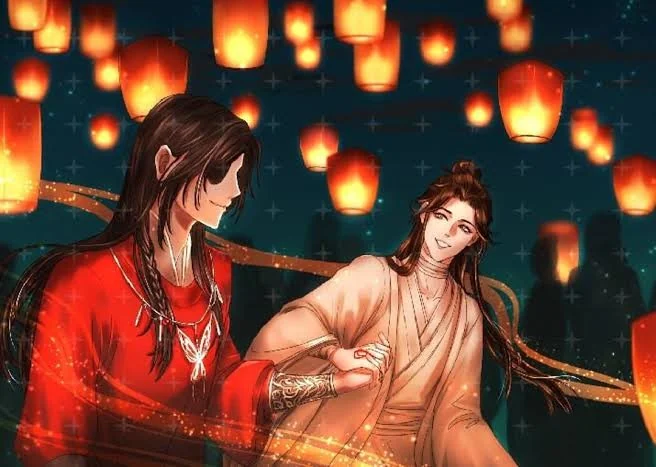
heaven official’s blessing: The Three Realms Explained
The world of heaven official’s blessing is organized around three broad realms: the Heavenly Realm, the Mortal Realm and the Ghost Realm. These labels are useful for orientation, but they should not be treated as a direct explanation of real Chinese religion. The series borrows ideas and visual language from Chinese mythology, religious traditions and classical fantasy, then builds a fictional system around its own characters, conflicts and rules.
The Heavenly Realm contains gods and officials whose positions are connected with spiritual power, worship, reputation and administrative responsibility. The Mortal Realm is where ordinary people live and where many supernatural incidents affect daily life. The Ghost Realm is associated with powerful ghosts and places such as Ghost City. Characters can move between these realms, and the boundaries between them are important to both the mystery and the political structure of the story.
This arrangement also creates a useful thematic contrast. Heaven may look orderly from a distance, yet heavenly officials can be jealous, political or self interested. Meanwhile, characters who are feared because they belong to the ghostly side of the world are not automatically evil. The story repeatedly separates moral behavior from official status, asking readers to judge people by what they do rather than by the category assigned to them.

heaven official’s blessing: Why the Heavenly Court Matters
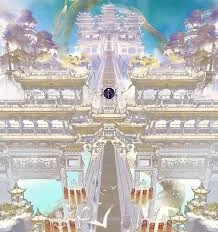
The Heavenly Court is more than a beautiful setting. It functions as an institution with hierarchy, reputation and competing interests. Officials have different positions, followers and responsibilities, and their reactions to Xie Lian are shaped by his history. Because the court remembers his previous failures, his third ascension is treated as an inconvenience by some rather than a celebration. This gives the story a political layer beneath its supernatural adventures.
That bureaucracy is also part of the series’ satire. Divine officials are supposed to represent order and virtue, yet they can behave like ordinary political actors. They worry about influence, status, appearances and alliances. The result is a world where heavenly authority does not automatically equal moral authority. Xie Lian’s position makes this especially visible because he has experienced both worship from below and suspicion from above.
Readers should also avoid using the fictional heavenly system as a textbook for Chinese religious practice. The series draws on a broad cultural vocabulary, but its gods, ghost kings, spiritual powers and institutional rules belong to its fantasy world. That distinction is useful because it lets the story be appreciated on its own terms while still encouraging curiosity about the traditions that influenced its atmosphere.
heaven official’s blessing: Puqi Shrine and the Importance of Ordinary Life
Puqi Shrine is one of the most useful places for understanding Xie Lian. Compared with the grandeur of the Heavenly Court, the shrine is small, worn and practical. It reflects his unusual position as a god who has returned without the wealth or public adoration associated with a powerful divine figure. He has to think about food, repairs, visitors and daily work instead of simply receiving worship from a distance.
That change in scale matters for the relationship between Xie Lian and Hua Cheng. Grand heavenly halls can make a person feel like an icon, while a modest home reveals habits and vulnerabilities. At the shrine, Xie Lian is not simply the Crown Prince or a martial god. He is someone who has to live with the consequences of his circumstances. The setting allows humor, awkwardness and quiet companionship to carry as much weight as battles.
The shrine also captures one of the novel’s recurring ideas: dignity does not depend entirely on social status. Xie Lian has less prestige than he once had, but the story does not treat that as proof that he has become less worthy. Instead, the gap between reputation and character becomes a central source of emotional depth. Readers see what remains when titles, temples and public approval disappear.

heaven official’s blessing: Major Themes That Give the Story Its Weight
heaven official’s blessing: Devotion, Faith and Recognition
Devotion is the obvious theme because Hua Cheng’s relationship with Xie Lian is central to the story, but the idea is broader than romance. Characters devote themselves to gods, causes, promises, friends and memories. The novel asks when devotion becomes strength and when it becomes dangerous attachment. That distinction is important because the same emotion can support another person or prevent someone from seeing them clearly.
Faith also changes meaning throughout the story. Worship can create social power for gods, but Xie Lian’s journey suggests that faith is not simply a transaction where good deeds produce guaranteed rewards. People can abandon a god, misunderstand a person or rewrite history. What matters is how characters behave when external validation disappears. This is why recognition becomes so important to the emotional arc of the main pair.
heaven official’s blessing: Redemption Without Erasing the Past
Redemption in the series is not a simple process of becoming innocent again. Xie Lian cannot undo the destruction and suffering connected with his past. Other characters also carry consequences from decisions that cannot be neatly repaired. The story therefore treats redemption as a continuing relationship with responsibility. A person may regret what happened and still have to decide what to do next.
heaven official’s blessing: Power, Reputation and Moral Judgment
Another recurring idea is the difference between power and goodness. Heavenly rank can make a character influential, while ghostly status can make another character feared, but neither category tells the reader everything important. The series repeatedly gives moral complexity to characters who occupy uncomfortable positions. That approach keeps the world from becoming a simple battle between heaven and hell and gives its conflicts a more human texture.
heaven official’s blessing: Why the Story Can Feel Slow at First
New readers sometimes expect immediate answers because the premise sounds like a straightforward supernatural romance. The novel takes a different approach. Early cases introduce the world, establish relationships and plant information that becomes meaningful later. The large cast can also make the first part feel dense because names and titles are introduced before their emotional significance is obvious.
The slower pace is not equally appealing to everyone. Readers who prefer rapid action may find the early investigations leisurely, while readers who enjoy mysteries and character driven fantasy often appreciate the gradual accumulation of clues. A useful approach is to keep a simple character list and avoid trying to memorize every heavenly title immediately. Most names become easier once their relationships and motivations have had time to settle.
The donghua changes the experience because animation can communicate atmosphere, movement and character chemistry quickly, but it also has less room for internal narration and long explanations. If the animated series leaves you curious about a character’s motives or an old event, that is often a sign that the novel may offer important additional context rather than a reason to assume the adaptation has explained everything.

heaven official’s blessing: Why Xie Lian and Hua Cheng Work as a Pair
The central relationship works because the characters do not simply mirror each other. Xie Lian is outwardly gentle and often self sacrificing, while Hua Cheng is outwardly confident and intimidating. Their strengths create a useful contrast, but their similarities matter too. Both are stubborn, both hold tightly to personal convictions, and both have experienced long periods of isolation. The relationship grows from those overlapping qualities as much as from attraction.
Their bond also gives the story a way to explore the difference between being worshipped and being known. Xie Lian has experienced admiration from crowds, yet much of his later life is marked by misunderstanding and ridicule. Hua Cheng’s attention is intensely personal. That does not mean every expression of devotion should automatically be treated as healthy, but it explains why recognition is such a powerful emotional idea in the series.
heaven official’s blessing: Final Thoughts
What makes heaven official’s blessing last in a reader’s mind is not only its beautiful fantasy setting or the appeal of its central romance. It is the way the story keeps returning to the question of what remains when reputation disappears. Xie Lian loses the status that once defined him, yet he continues to make choices. Hua Cheng becomes powerful enough to frighten entire realms, yet his most important actions are often directed toward one person.
That combination gives the series a wider emotional reach than a standard supernatural romance. It asks readers to think about devotion, forgiveness, responsibility, identity and the difference between being admired and being understood. If you are approaching the story for the first time, do not worry about knowing every name immediately. Start with Xie Lian, follow the mystery around Hua Cheng, and let the wider world unfold at its own pace.
heaven official’s blessing: Frequently Asked Questions
heaven official’s blessing: What is heaven official’s blessing?
Heaven Official’s Blessing is the English title of Tian Guan Ci Fu, a Chinese fantasy danmei novel by Mo Xiang Tong Xiu. It follows Xie Lian, a fallen and repeatedly ascended god, and Hua Cheng, a powerful ghost king. The story combines supernatural adventure, mythology, mystery, political conflict, emotional drama and romance.
heaven official’s blessing: Is heaven official’s blessing a BL or boys love story?
Yes. The original novel is a danmei work centered on the romantic relationship between Xie Lian and Hua Cheng. The animated adaptation also presents their relationship as central, although adaptation choices can make the romantic elements feel more understated than in the complete novel.
heaven official’s blessing: Is heaven official’s blessing a Chinese anime?
It is more accurately described as a Chinese animated series, commonly called donghua. Many international viewers use the phrase anime because they are familiar with that category, but donghua identifies the production as Chinese animation.
heaven official’s blessing: Who is Xie Lian in heaven official’s blessing?
Xie Lian is the former Crown Prince of Xianle and the main protagonist. He ascends to godhood three times and is banished twice before the main story begins. His later life is far less glamorous, and his journey focuses heavily on responsibility, compassion, failure, resilience and identity.
heaven official’s blessing: Who is Hua Cheng in heaven official’s blessing?
Hua Cheng is a powerful ghost king and one of the central characters. He is also known as San Lang in one of his identities and as Crimson Rain Sought Flower by reputation. His deep connection to Xie Lian is the main romantic thread of the series.
heaven official’s blessing: How many volumes does the English heaven official’s blessing novel have?
The official English edition published by Seven Seas Entertainment is complete in eight volumes. Seven Seas also publishes deluxe hardcover editions of the series, giving collectors another official English format.
heaven official’s blessing: How many chapters does the heaven official’s blessing novel have?
The original novel is commonly counted as having 244 main chapters plus eight extras. Chapter numbering and how extras are grouped can vary between editions and fan references, so readers should use the table of contents in their specific edition when locating an exact section.
heaven official’s blessing: How many seasons of the heaven official’s blessing donghua are available?
Two full animated seasons have been officially released. Bilibili lists the second season as a continuation of the series, and Crunchyroll provides official episodes in supported regions. Future animated shorts or promotional releases should not automatically be treated as a formally announced third season.
heaven official’s blessing: Where can I watch heaven official’s blessing legally?
Official availability varies by country. Crunchyroll has an official series listing with subtitles and selected dubs, while Bilibili also hosts official series material. Check the current catalog in your region because licensing, language options and subscription requirements can change.
heaven official’s blessing: Should I read the novel before watching heaven official’s blessing?
You do not have to. The donghua is designed to work as an introduction, especially for viewers who prefer animation. However, reading the novel from the beginning gives you more internal narration, background information and detail about the supporting cast. Many readers prefer that route when they want the fullest version of the story.
heaven official’s blessing: Where should I start the novel after heaven official’s blessing season 2?
If your goal is to continue immediately after the second animated season, published guides commonly place the continuation around the early part of the next novel section. Because adaptation boundaries can be described differently depending on whether chapters or English volumes are being used, starting from the beginning of the novel is the safest choice if you want to avoid missing context.
heaven official’s blessing: Is heaven official’s blessing finished?
The original novel is complete, and the official English translation is complete in eight volumes. The animated adaptation is separate and does not yet represent the entire novel. This distinction is important when people ask whether the story is finished because the source material and the animation have different completion statuses.
heaven official’s blessing: Is heaven official’s blessing a romance?
Yes. Romance is a major part of the original novel, particularly the relationship between Xie Lian and Hua Cheng. The story is not only romance, however. It also contains fantasy adventure, mystery, political conflict, mythology, horror elements and long character arcs that continue beyond the central relationship.
heaven official’s blessing: What genre is heaven official’s blessing?
It is best described as Chinese fantasy with danmei romance, supernatural adventure, mystery and xianxia inspired world building. The story combines heavenly officials, ghosts, gods, cultivation style concepts, political institutions and a long romantic arc rather than fitting neatly into only one genre.
heaven official’s blessing: Why is heaven official’s blessing so popular?
Its appeal comes from several elements working together: memorable leads, a slow developing romance, a large fantasy world, mystery driven reveals, emotional character histories and recurring themes about devotion and identity. Readers also enjoy the contrast between Xie Lian’s gentle personality and Hua Cheng’s intimidating public reputation.
